Home
Home Articles
 Twos Talks
 Videos
The Designer’s Curse: You Can’t Unsee Bad Design
Design training changes how we see the world. What once looked ordinary begins to reveal structure, imbalance, and visual mistakes that most people never notice.
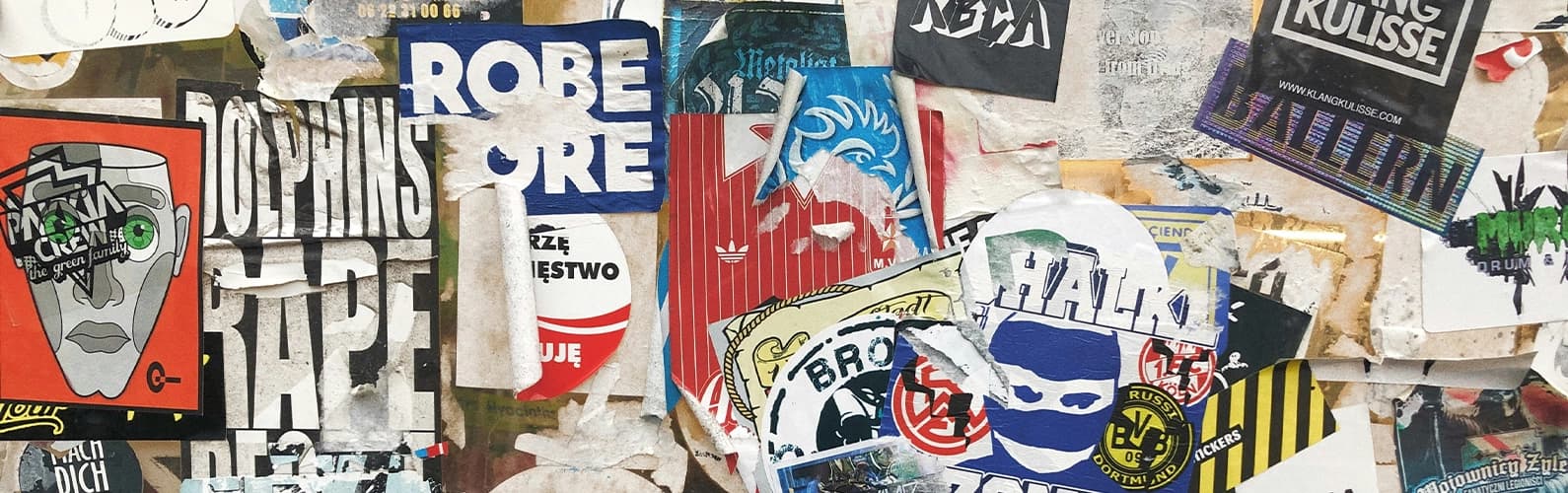
You’re standing in line at a café when your eyes land on the menu board. At first everything seems normal, but then you notice the uneven spacing, the awkward alignment, and the cramped lines of text. No one else seems to notice. People keep ordering and conversations continue, but you can’t stop looking.
At some point, learning design changes the way you see things. You begin to notice structure, hierarchy, spacing, and the visual decisions behind everything. And once you see them, bad design becomes impossible to ignore.
Why Designers Notice What Others Don’t
What happens after design training is not just increased attention. It is the development of visual expertise. Designers gradually internalize patterns of visual structure, which allows them to recognize when something breaks those patterns.
Research in cognitive science supports this idea. Studies on visual expertise show that trained observers develop faster pattern recognition within their domain. In a study on visual attention by Reingold and Sheridan (2011), experts were able to detect anomalies in their domain significantly faster than non-experts because they had already internalized what a normal pattern should look like.
When you understand the grammar of visual communication, small inconsistencies become instantly visible.
In other words, designers are not necessarily looking harder. They are simply seeing through a different set of learned patterns.
The Patterns Designers Start Seeing Everywhere
Once your eye becomes sensitive to visual structure, certain patterns start appearing everywhere. They show up in movie posters, product interfaces, public signage, and even the buildings we pass every day. To most people these are just normal visuals. To a designer, they often feel like unresolved design problems.
Once you start noticing them, you begin to see the same patterns repeating everywhere.

The “Floating Heads” Movie Poster
Hollywood has relied on this formula for years: a collage of actors’ faces hovering in dramatic lighting above explosions, skylines, or vague background textures. The visual hierarchy is usually unclear, the composition overcrowded, and the typography squeezed into whatever space remains.

The Overloaded Restaurant Menu
Too many typefaces, inconsistent alignment, decorative borders, photos, icons, and promotional badges competing for attention. Instead of guiding the eye, the layout forces the reader to hunt for information.

The Infinite Carousel on Websites
Homepage sliders that rotate automatically through five or six messages. Users rarely read them, but they persist because every department wants visibility. The result is diluted hierarchy and unclear focus.

Luxury Architecture Without Restraint
In many cities, upscale developments attempt to signal prestige through visual excess: oversized columns, ornamental facades, reflective glass, dramatic lighting, and competing materials. Instead of coherence, the result often feels like a collage of competing status symbols.

The “Make It Pop” Graphic
Bright gradients, drop shadows, glowing outlines, oversized icons, and heavy contrast layered together in the name of visibility. Everything tries to shout at once, which usually means nothing is actually emphasized.

The Engagement-Driven Social Post
Many social media graphics are designed to maximize visibility rather than clarity. Oversized typography, exaggerated colors, emoji overload, and multiple visual focal points compete for attention within a small frame. The result may stop the scroll for a moment, but it rarely creates a clear visual hierarchy.
What Great Designers Have Always Known
Design rarely fails because of one catastrophic decision. More often, it weakens through accumulation: small inconsistencies, unresolved details, and visual decisions that were never fully considered.
American designer Charles Eames, best known for his work in furniture and industrial design, once put it simply:
“The details are not the details. They make the design.”
For designers, this is not just a slogan. It is a daily reality. Tiny adjustments in spacing, rhythm, and proportion can quietly transform how something feels and functions.
Italian graphic designer Massimo Vignelli, known for his influential work in identity systems and editorial design, believed the same discipline applied across visual communication:
“If you can design one thing, you can design everything.”
German industrial designer Dieter Rams expressed a similar idea in his famous principles for good design:
“Good design is as little design as possible.”
Contemporary graphic designer Michael Bierut, partner at Pentagram, describes the discipline in even simpler terms:
“Graphic design is the art of visualizing ideas.”
When details are handled well, the design almost disappears. When they are not, the problems become visible everywhere.
The Curse or the Gift?
Most people move through the visual world without questioning it. Designers rarely have that luxury. They notice the misaligned text, the awkward spacing, the unnecessary decoration, the structure that almost works but not quite.
At times, it can feel like a curse. The world becomes full of small imperfections that are impossible to ignore.
But the same sensitivity is also what makes design possible in the first place. Because noticing what others overlook is the first step toward making things clearer, calmer, and more intentional.
And once you learn to see it, you rarely stop noticing.