Home
Home Articles
 Twos Talks
 Videos
First Things First: The First Logo in History
A short essay on the history of logos, trademarks, and brand visual identity. What was the first logo design in history? well let's find out
Look around any city street, website, or product shelf and you will see them everywhere. Small symbols placed on packaging, storefronts, clothing labels, and digital interfaces. A swoosh, a bitten apple, a pair of golden arches. These marks are designed to be instantly recognizable, standing in for entire companies, products, and reputations.
We call them logos. But the idea behind the logo is much older than modern branding. Long before corporations existed, people were already marking objects with symbols that identified their makers. So, the question becomes less obvious than it first appears.
What was the first logo in history?
What Is a Logo?
Today a logo is usually defined as a distinctive visual mark used to identify a company, organization, product, or brand. It functions as a compact visual signature: a symbol that carries identity, reputation, and recognition.
But if we broaden the definition slightly, the idea becomes much older. Any mark that consistently identifies the maker or origin of an object begins to resemble the function of a logo.
Design historians often describe logos as part of a longer tradition of visual identification systems that evolved gradually rather than appearing all at once.
To find the origins of logos, we must look back to the earliest moments when humans began marking their creations.
Maker’s Marks: The Earliest Visual Signatures
Thousands of years before modern brands, artisans were already marking their work.
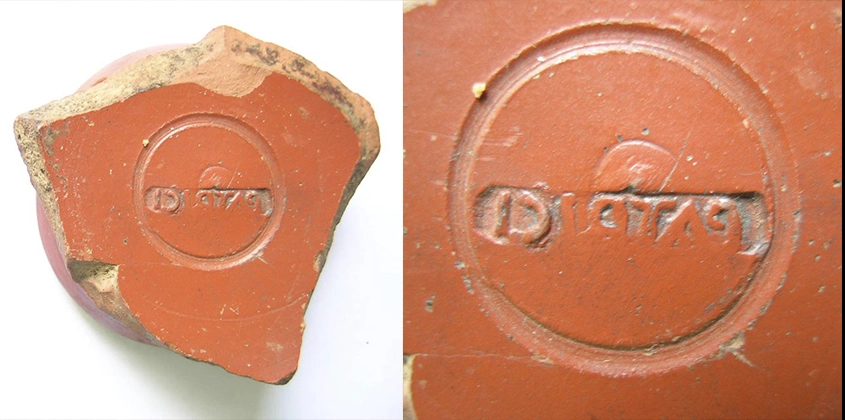
Archaeologists have found maker’s marks on pottery, bricks, metalwork, and tools from ancient civilizations including Greece, Rome, Egypt, China, and Mesopotamia. These marks could be simple symbols, initials, pictograms, or small decorative signs impressed or carved into objects.
Greek pottery workshops frequently stamped vessels with identifying marks. Roman brickmakers impressed symbols into wet clay before firing. Medieval goldsmiths used distinctive punch marks that allowed guilds to trace the origin and quality of precious metals. Many craft guilds across Europe developed similar marking systems, linking objects to particular workshops and production standards.
Forms of visual ownership also appeared outside craft production. In agricultural societies, livestock were often marked with heated irons to indicate ownership. These branded symbols, used for centuries across Europe and later in the Americas, functioned as another early method of visual identification.
These symbols served several practical purposes:
• identifying the maker
• indicating workshop origin
• guaranteeing quality
• enabling accountability within trade networks
Although they were not “logos” in the modern corporate sense, they performed a remarkably similar function: connecting a visual sign with a specific producer.
In this sense, the first step toward the logo was the simple human desire to sign one’s work.
Printer’s Marks: Identity in the Age of Print
A major step toward modern logo systems appeared in the fifteenth century with the invention of printing.
When Johannes Gutenberg introduced movable type in Europe around the 1450s, printing quickly spread across the continent. Printers and publishers soon began placing distinctive symbols in their books to identify their workshops.
These symbols became known as printer’s marks.
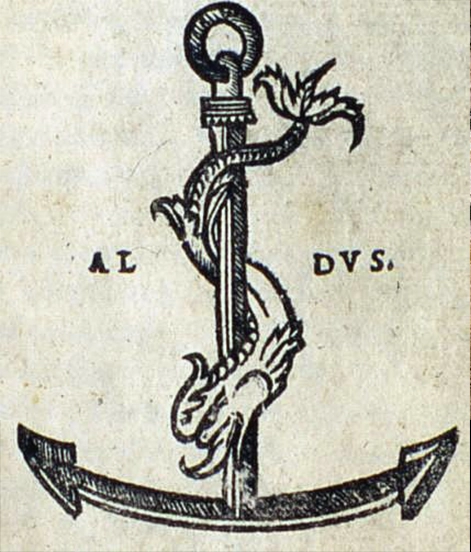
One well known example is the device used by the Venetian printer Aldus Manutius: an anchor wrapped by a dolphin. First used in the late fifteenth century, the mark symbolized the phrase festina lente (“make haste slowly”) and became a recognizable signature for Aldine editions.
Printer’s marks combined symbolism, typography, and consistent reproduction across multiple publications. Because printing allowed the same mark to appear repeatedly on hundreds or thousands of books, these devices functioned much like early logos for publishing houses.
Design historian Stephen Eskilson describes printer’s marks as some of the earliest systematic identity symbols used in printed media.
Yet something was still missing: a legal structure that connected a symbol with exclusive commercial ownership.
The Birth of Trademarks
The modern logo emerged during the nineteenth century alongside the rapid expansion of industrial production. Factories could now produce identical goods in massive quantities and distribute them across national and international markets. As products began traveling farther from their makers, visual identification became increasingly important.
Consumers needed a way to distinguish between similar goods. Producers needed a way to protect their reputation from imitation.
The solution was the trademark.
In 1875 the British Parliament passed the Trade Marks Registration Act, one of the first modern legal systems allowing companies to formally register visual marks associated with their products. Registration provided legal protection and exclusive ownership of a symbol within commerce.
For the first time, a visual mark could function as a legally recognized commercial identity.
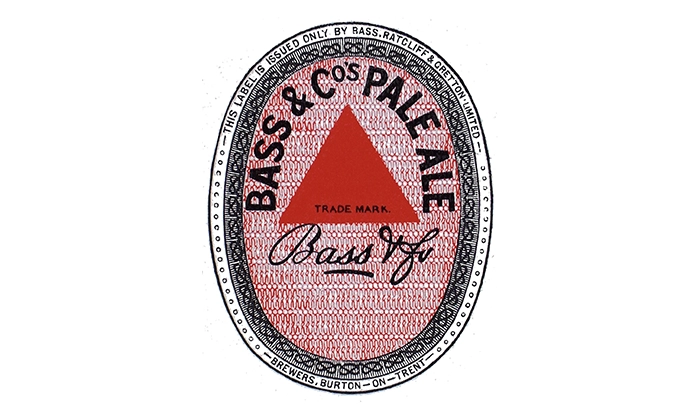
Bass Red Triangle (1876): The First Registered Trademark
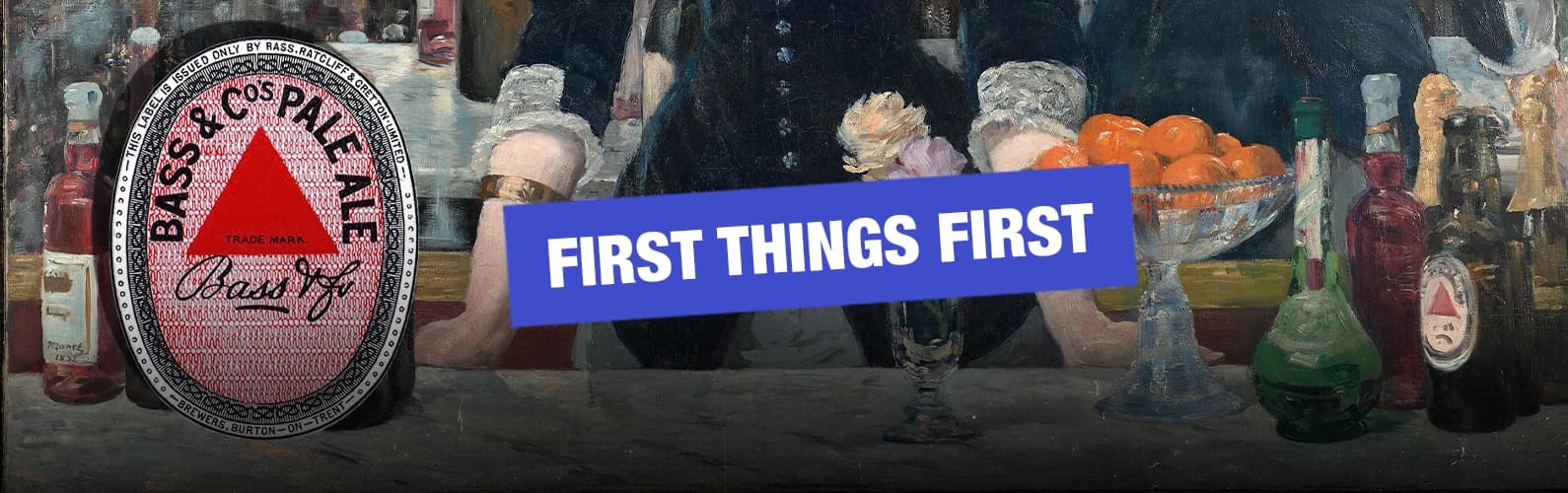
On January 1, 1876, the Bass Brewery in Burton upon Trent registered a simple red triangle as its trademark. According to historical accounts, employees reportedly waited overnight outside the trademark registration office to ensure their application would be the first recorded under the new law.
The design itself was very simple: a solid red triangle accompanied by the Bass name.
Despite its simplicity, the mark became one of the most recognizable commercial symbols of the nineteenth century. It appeared on bottles, labels, barrels, advertisements, and pub signage throughout Britain and beyond.
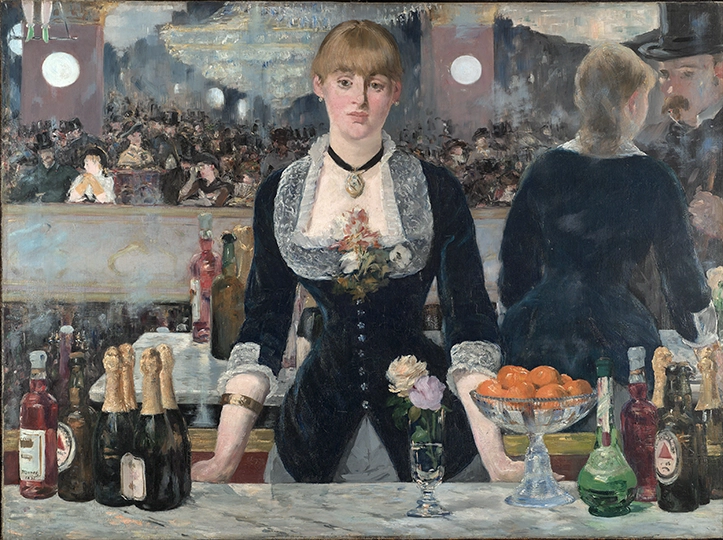
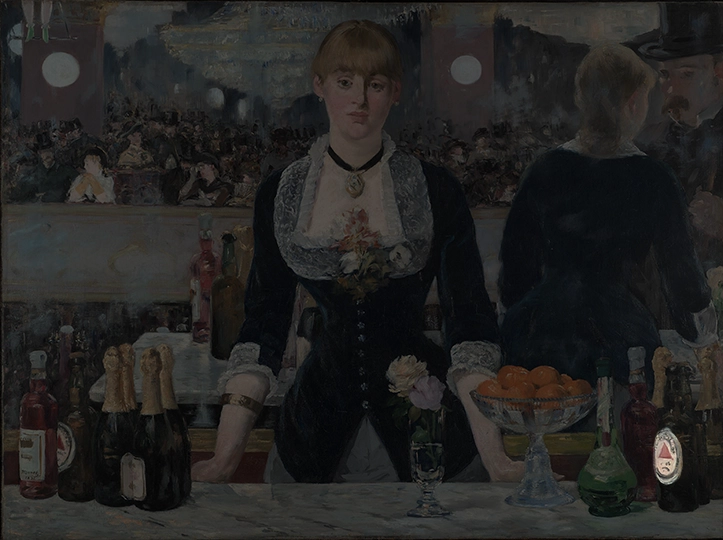
Art historians often note that the Bass triangle can even be seen in Édouard Manet’s 1882 painting A Bar at the Folies-Bergère, sitting on bottles behind the bar, evidence of how widely the brand had spread.
Because it was the first mark formally recorded under modern trademark law, the Bass Red Triangle is widely regarded as the first registered trademark and one of the earliest modern logos.
Remarkably, the symbol is still in use today, making it one of the longest continuously used brand marks in the world.
What Counts as the First Logo?
Like many questions in design history, the answer depends on definition.
Each possible “first” reflects a different historical threshold:
The First Maker’s Marks (ancient civilizations): symbols identifying craftsmen and workshops
The First Printer’s Marks (15th century): repeatable identity symbols in printed media
The First Legal Trademark (1876): the Bass Red Triangle
The First Modern Corporate Logos (late 19th–early 20th centuries): marks designed specifically for brand identity
Seen this way, the logo did not appear suddenly at a single moment in history. It evolved gradually as societies developed trade networks, printing technologies, industrial production, and legal systems capable of protecting commercial identity. What we call a logo today is therefore not a single invention, but the latest stage in a much longer tradition of marking authorship, origin, and reputation through visual signs.