Home
Home Articles
 Twos Talks
 Videos
First Things First: The First Illustration in History
The origin of illustration, from prehistoric cave art to the first visual communication systems, and how early humans used images to share ideas before written language existed.
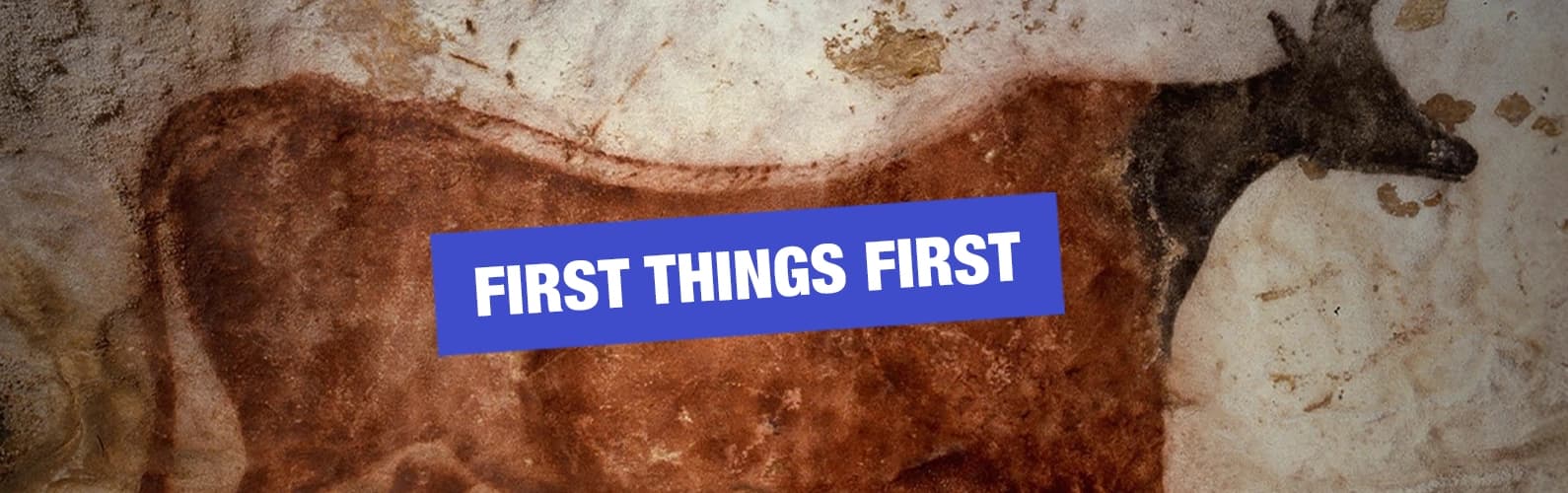
How do we trace the history of illustration? Do we begin with medieval manuscripts and the age of print, or does the story go further back, to a time before writing?
Long before alphabets and books, humans were already creating images to communicate ideas. They painted animals on cave walls, pressed their hands onto stone, and carved figures into bone. These were not decorations. They were attempts to represent the world, remember experiences, and share knowledge. Although the word illustration did not yet exist, these early images mark the moment when human marks became meaningful pictures, forming the earliest examples in the history of illustration.
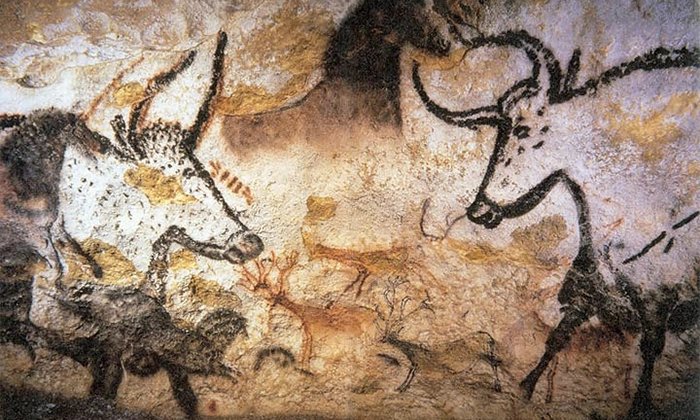
What Is Considered the First Illustration?
In today’s world, illustration is usually defined as imagery that clarifies a text or message. Prehistoric humans lived without written language, so images carried the full responsibility of communication.
Archaeologists use the term “rock art” to describe these early forms of visual communication. It includes paintings, engravings, carvings, and symbols found on cave walls and rock surfaces. Much of this work dates to the Upper Paleolithic period, roughly 45,000 to 10,000 years ago.
Although rock art served many purposes, it shares the same core function as illustration: visually representing ideas so others can understand them. Researchers such as prehistoric art specialist Jean Clottes have emphasized that these images should be understood as forms of symbolic communication rather than simple decoration. For this reason, historians do not look for a single first illustration, but for the moment when images became intentional tools for communication.
The Earliest Known Images
Some of the oldest figurative images in the history of illustration appear in:
Chauvet Cave in France, dated to approximately 30,000 to 36,000 years ago. Its lions, horses, and rhinoceroses show striking line work and a strong sense of spatial awareness.
Sulawesi in Indonesia, where hand stencils and animal paintings have been dated to at least 45,000 years ago. A 2014 study published in Nature showed that some of these paintings are among the oldest known figurative images created by humans.
Lascaux Cave in France, painted around 17,000 years ago. Its large panels of bulls and horses show movement, rhythm, and attention to anatomy.
Their intentions may have included storytelling, ritual practices, or shared knowledge, but the skill and complexity of the images are undeniable.
The Earliest Known Images
Some of the oldest figurative images in the history of illustration appear in:
Chauvet Cave in France, dated to approximately 30,000 to 36,000 years ago. Its lions, horses, and rhinoceroses show striking line work and a strong sense of spatial awareness.
Sulawesi in Indonesia, where hand stencils and animal paintings have been dated to at least 45,000 years ago. A 2014 study published in Nature showed that some of these paintings are among the oldest known figurative images created by humans.
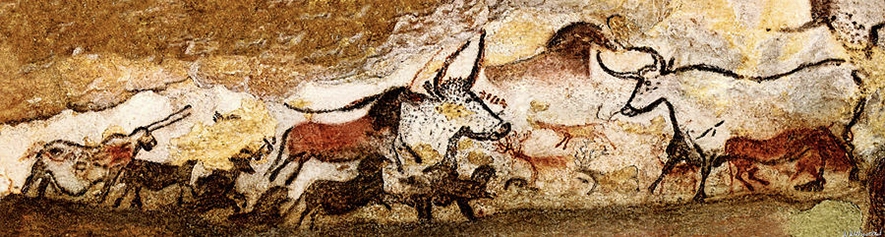
Lascaux Cave in France, painted around 17,000 years ago. Its large panels of bulls and horses show movement, rhythm, and attention to anatomy.
Their intentions may have included storytelling, ritual practices, or shared knowledge, but the skill and complexity of the images are undeniable.
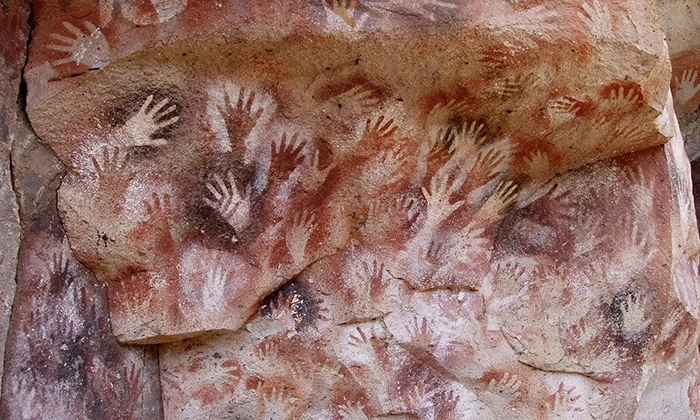
Hand Stencils and the First Human Sign
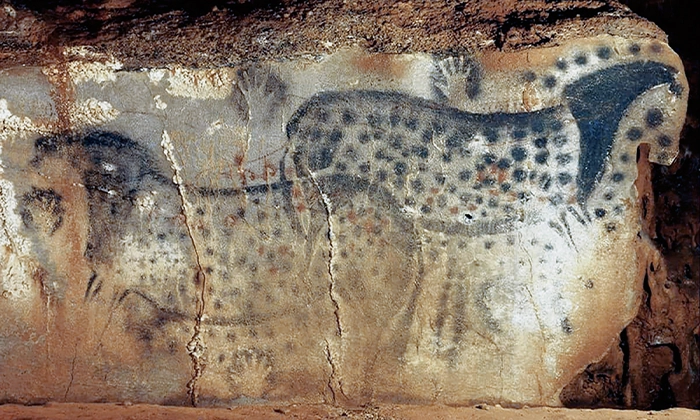
Among the earliest recognizable forms of visual communication are hand stencils. These were created by placing a hand on rock and blowing pigment around it, leaving a clear and repeatable negative silhouette.
Hand stencils appear across Europe, Asia, Australia, and the Americas. Their meaning is still debated, but several interpretations include:
markers of presence or identity
elements of ritual or community practice
symbolic communication
What matters for visual communication is the intention behind them. A hand stencil is a human saying, through an image, “I am here” or “This is us.” It is one of the earliest examples of transforming an action into a visual sign.
From Representation to Story
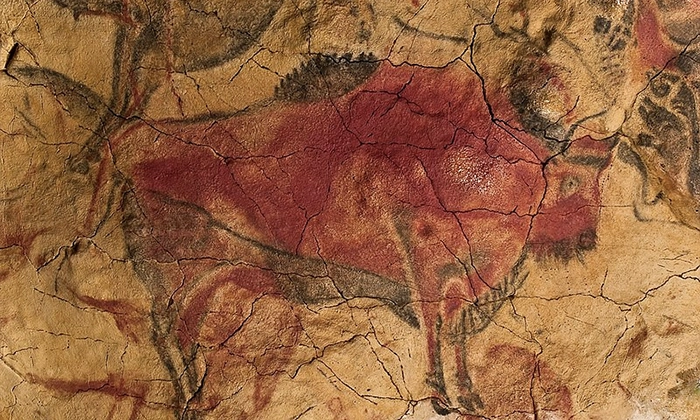
Many prehistoric images show animals such as bison, deer, horses, and mammoths. In some locations, the figures appear alone. In others, they form compositions that imply motion, interaction, or events.
A group of animals facing the same direction can suggest movement. Overlapping figures can hint at sequence. Scenes that include human figures and tools can imply activities related to hunting or communal life.
These visual arrangements introduce something essential to illustration: narrative. The moment figures relate to one another on a surface, the image begins to tell a story instead of simply depicting an object. Cognitive archaeologist David Lewis-Williams has argued that such images reveal an important stage in human development, when people began externalizing complex thoughts and shared experiences through visual symbols.
How Prehistoric Images Were Made
Despite limited tools, early humans developed effective methods for creating images:
Mineral pigments such as ochre, charcoal, and manganese oxide
Application techniques including drawing with fingers, using primitive brushes, dabbing pigment, and spraying through hollow bones
Careful placement of figures on the rock surface
Use of natural contours to suggest volume and movement
These decisions show that prehistoric image making involved observation, skill, and deliberate visual choices.
Why Humans Created These Images
There is no single explanation, but researchers generally agree on several possible motivations:
Ritual or symbolic meaning
Transfer of knowledge about animals and landscapes
Social or cultural identity
Storytelling and memory
Creative expression and mark making
These functions could overlap. The same image might have held practical, symbolic, and emotional significance for its makers.
The Beginning of Visual Communication
These early images mark the roots of visual communication and the origin of illustration. Over time, visual mark making evolved into symbolic systems, early scripts, illustrated manuscripts, printmaking, and eventually the wide range of illustration we know today.
Organizations such as UNESCO describe these prehistoric sites as evidence of humanity’s earliest symbolic systems, showing that visual representation was already a powerful tool for sharing knowledge and experience.
Tools and contexts changed, but the core purpose remained the same: to make ideas visible.
The First Illustration Is Not a Single Image
Modern readers may look for a precise answer, but the search for the first illustration leads somewhere else. There is no single image that can claim the title. Instead, there is a turning point in human behavior, when marks became recognizable pictures with shared meaning.
This turning point is the true beginning of illustration. It is the moment when humans chose to communicate visually, long before text existed.
From cave walls to printed pages and digital interfaces, every illustration belongs to this same story: the ongoing human desire to transform experience into visible form.