Home
Home Articles
 Twos Talks
 Videos
5 Biggest Valentine's Day Ad Fails
A not-so-romantic look at the most awkward Valentine’s Day marketing campaigns. Here are our picks for top 5 biggest Valentine's Day Ad Fails

While Valentine’s Day often brings out the best in marketing, it can also expose its weakest instincts. In the rush to appear romantic, playful, or provocative, some brands lose sight of what the occasion is actually about, producing campaigns that confuse romance with spectacle, humor with carelessness, and affection with discomfort. Below are five campaigns that serve as reminders that not every idea benefits from being dressed in red and pink.
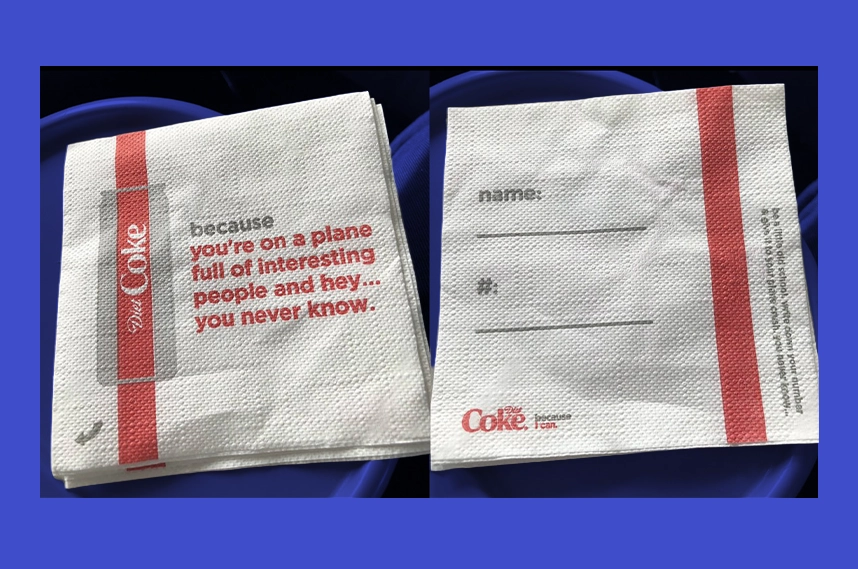
5. Delta and Coca-Cola (2019)
In February 2019, Delta Air Lines and Coca-Cola attempted to inject romance into air travel with a Valentine’s Day concept printed on in-flight napkins. Passengers were encouraged to write down their phone numbers and hand them to a “cute stranger” on board, creating a moment of spontaneous connection at 35,000 feet.
What the idea underestimated was context. Airplanes are confined spaces where politeness is often mistaken for consent and personal boundaries are already under pressure. For many passengers, the napkins felt less like a charming icebreaker and more like an obligation disguised as flirtation. The campaign was quietly removed after criticism, becoming a lesson in how romance does not automatically thrive in cramped seating and recycled air.
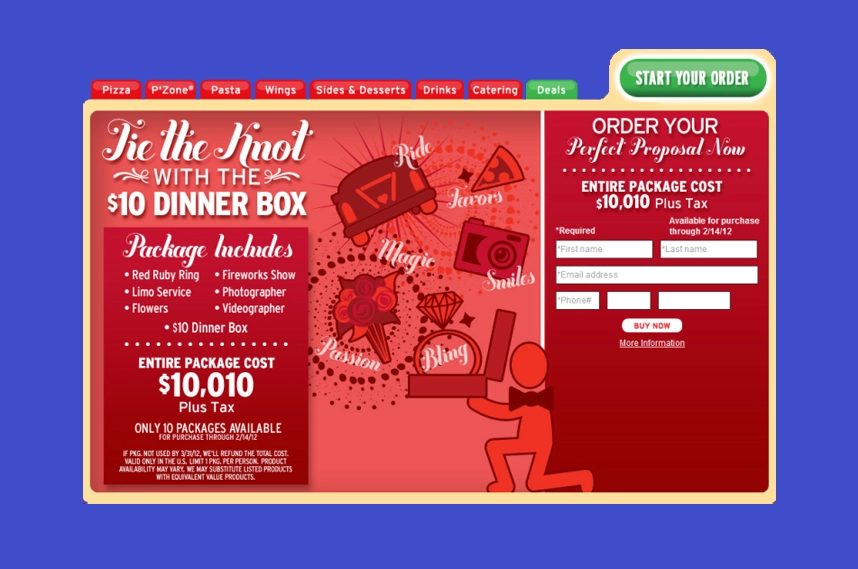
4. Pizza Hut (2012)
In 2012, Pizza Hut introduced a Valentine’s Day promotion that aimed high and landed somewhere between ambition and absurdity. The brand offered a $10,010 “proposal package” to ten couples, complete with a proposal planner, fireworks, a diamond ring, limousine service, and the grand romantic moment itself, staged inside a Pizza Hut restaurant.
The contrast was hard to ignore. A luxury price tag paired with a familiar fast-food setting created an experience that felt unintentionally comic. Romance relies heavily on atmosphere, and few people associate lifelong commitments with red plastic cups and the smell of pepperoni. The campaign became memorable less for its generosity and more for its inability to read the room.
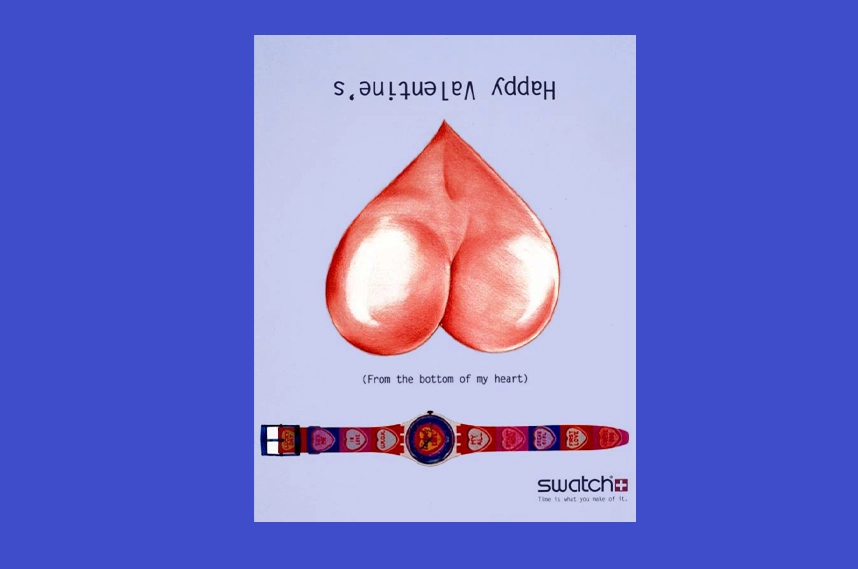
3. Swatch (1990s)
In the late 1990s, Swatch released a Valentine’s Day ad featuring a playful, cheeky visual built around wordplay and suggestion. At the time, the campaign was seen as clever and in step with the advertising culture of the era.
Looking back, it’s clear how much cultural perception has changed. While the ad may have felt harmless then, today it reads as a product of an older approach that objectified women and treated bodies as props. It’s not a catastrophic failure, but a reminder that what passes as playful or edgy in one era can feel tone-deaf or problematic in another.

2. Bloomingdale’s (2015)
Bloomingdale’s 2015 holiday campaign included a print ad that gained attention for an unfortunate line suggesting it might be acceptable to “spike your best friend’s eggnog when they’re not looking.” While originally part of a broader seasonal push, the ad quickly entered conversations about romance, alcohol, and consent, making it especially uncomfortable in a Valentine’s Day context.
What may have been intended as dark humor instead read as careless and unsettling. When viewed through the lens of a holiday centered on trust and intimacy, the phrasing struck a particularly disturbing note. The ad was removed after criticism, standing as a reminder that playful language still carries responsibility.

1. Nathan’s Jewelry (2002)
Nathan’s Jewelry remains one of the most cited examples of Valentine’s Day advertising gone completely off course. In 2002, the Brazilian brand released an ad implying that buying jewelry would guarantee sexual access to a woman, reducing romance to a crude transaction.
The message went further by framing engagement rings as symbols of ownership rather than commitment. Instead of celebrating love, the campaign relied on demeaning stereotypes that stripped both the product and the holiday of any emotional meaning. What was meant to persuade ended up alienating, making the ad memorable for all the wrong reasons.