Home
Home Articles
 Twos Talks
 Videos
Twos Studio x Centre Pompidou: Why Henri Matisse Is an Icon
From Fauvism and expressive color to revolutionary paper cut-outs, an editorial collaboration between Twos Studio and the Centre Pompidou.
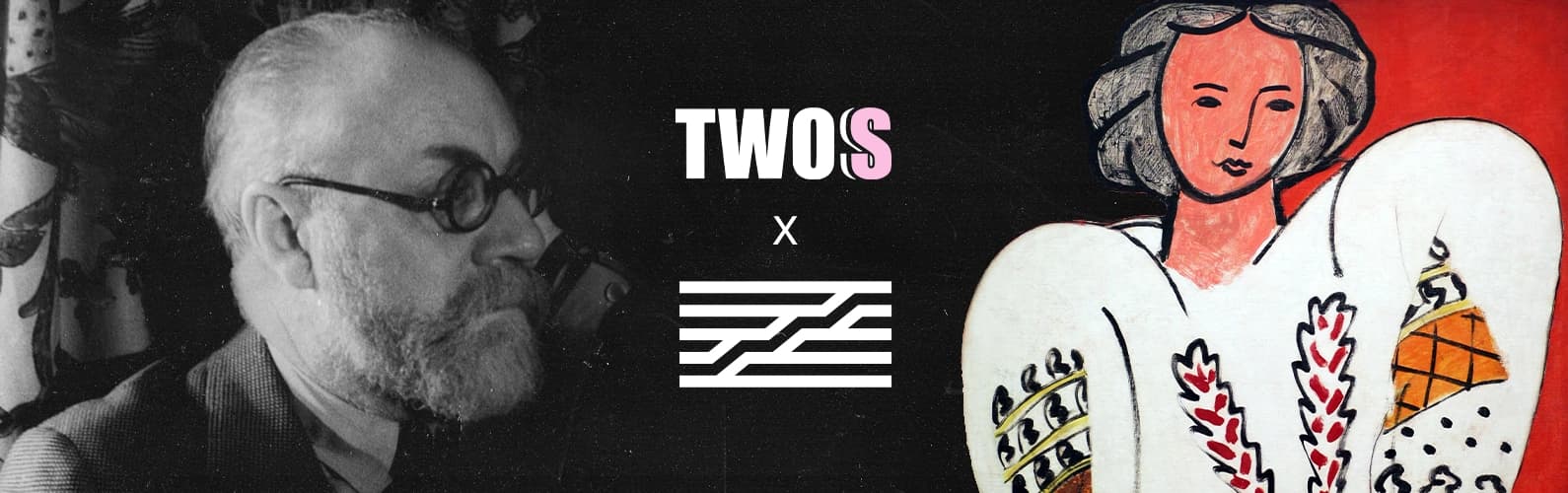
This article is based on the micro documentary video collaboration between Twos Studio and the Centre Pompidou. The documentary explores how Henri Matisse transformed painting from a reflection of reality into an expression of emotion. Through expressive color, radical composition, Fauvism, and later his iconic paper cut-outs, Matisse changed the visual language of modern art and created some of the most celebrated paintings of the twentieth century.
Henri Matisse and Modern Art
Illustration has deep prehistoric roots. But posters belong to a different chapter, one that requires paper, public space, reproducibility, and a message directed at strangers.
So, the question becomes:
When did humans first place an image or text in a public space with the intention of influencing others?
If we define a poster as a printed sheet designed for public display, meant to inform or persuade, the hunt for the first one becomes surprisingly tangled. Unlike illustration, whose origins dissolve into Paleolithic walls, the poster’s history is tied to far more concrete technologies: woodblock printing, movable type, mass production of paper, urban literacy.
Yet even with clearer evidence, the answer is still plural, not singular.
Color, Fauvism, and Composition
Matisse built much of his visual language around two central ideas: color and composition.
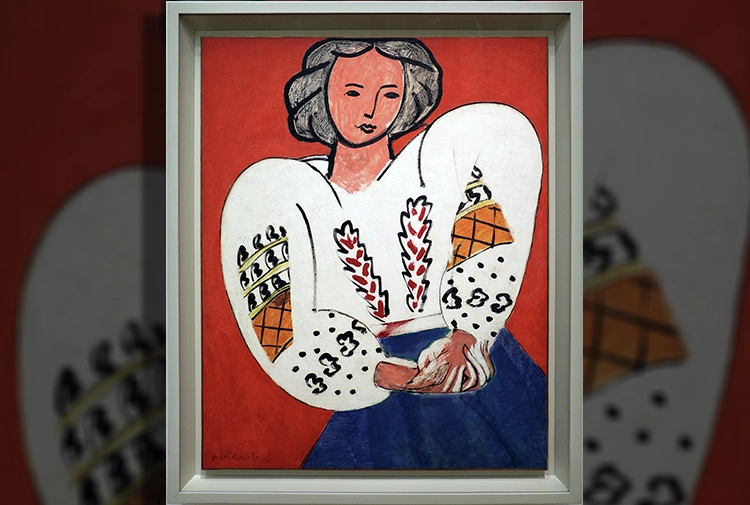
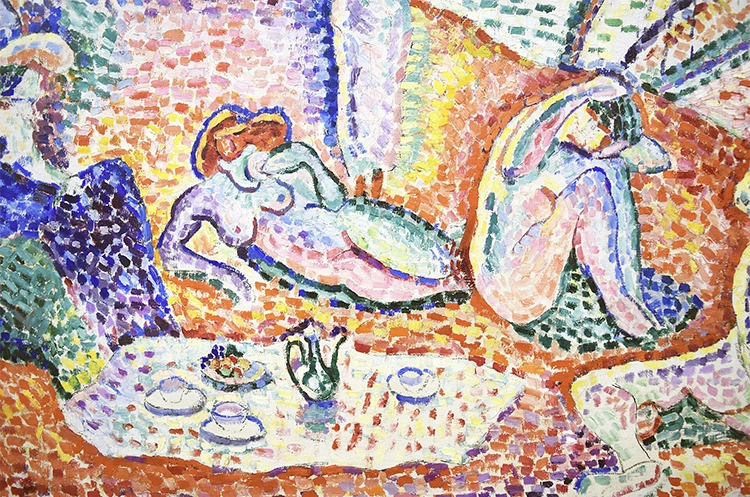
Henri Matisse became widely associated with Fauvism, the early modern art movement known for its bold and unrealistic use of color. He used color not as a realistic description of the world, but as a way to express feeling toward his subject. Warm reds, deep blues, bright yellows, and bold greens became emotional tools in his hands. His paintings often feel calm, joyful, rhythmic, or intimate because of the way he organized color across the canvas.
Composition was equally important. Matisse carefully arranged shapes, patterns, and figures to create harmony and balance within the frame. Even the empty spaces in his works were intentional.
In paintings such as La Blouse roumaine, Matisse simplified the scene by stripping away many unnecessary details and guiding the viewer’s attention toward the decorative patterns of the clothing. Rather than overwhelming the viewer with information, he reduced the image to its emotional center. This balance between simplification and emotion became one of the defining qualities of Henri Matisse paintings.
This philosophy can also be seen throughout many of his interiors, portraits, and still lifes, where walls flatten, objects merge into patterns, and color itself becomes part of the composition.
Cancer, Cut-Outs, and Reinvention
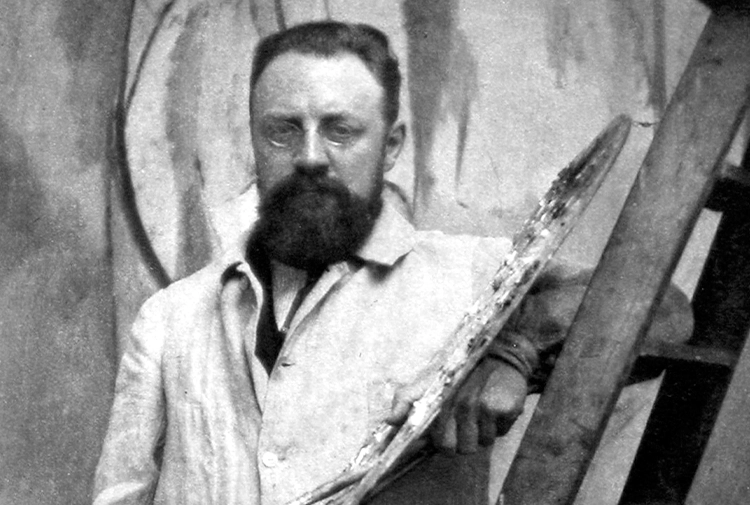
Later in life, Matisse was diagnosed with cancer. The illness and surgery left him physically weakened and unable to work the same way he had before. Yet rather than ending his artistic journey, this difficult period opened a completely new chapter in his career.
Unable to paint freely for long periods, Matisse began working with paper cut-outs. Instead of drawing shapes and filling them with color afterward, he cut directly into painted paper with scissors. He described this process as “drawing with scissors.” These cut-outs would later become some of the most famous Henri Matisse artworks ever created.
What began as a practical adaptation slowly evolved into one of the most revolutionary periods of his career.
The bold shapes, flowing compositions, and simplified forms of the cut-outs carried the same emotional clarity that had defined his paintings for decades. His understanding of harmony and composition translated perfectly into this new medium.
Many critics and historians now consider these final years among the greatest works of his entire career.
The Joy of Creation
Even during illness, Matisse continued searching for beauty, balance, and joy through art.
The cut-outs of his later years feel playful, alive, and full of movement. Works such as Blue Nude II, The Snail, and Jazz show an artist who never stopped experimenting, even toward the end of his life. Today, these works are considered some of the most important examples of modern art and remain central to discussions around Henri Matisse’s style and legacy.
Rather than allowing physical limitations to define him, Matisse transformed them into a new creative language.
This ability to reinvent himself while remaining emotionally honest is one of the reasons Henri Matisse remains one of the true icons of modern art.
Matisse at Centre Pompidou
Visitors can now experience hundreds of works from the artist’s final creative years in the exhibition “Matisse, 1941–1954” presented by the Centre Pompidou at the Grand Palais in Paris.
The exhibition explores the final chapter of Matisse’s life and the radical artistic transformation that followed his illness, bringing together paintings, drawings, cut-outs, illustrated books, and archival materials from this important period.
“Matisse, 1941–1954” Grand Palais, Paris March 24 – July 26, 2026