Home
 Articles
 Twos Talks
 Videos
First Things First: The First Magazine Cover in History
A short essay tracking down the first magazine cover and tracing the gradual emergence of its role as a sales tool.
A magazine cover has to make its case before a reader opens it. An eye-catching image or a line of type can sell an issue at a glance. The opening pages of early periodicals varied widely. Some featured a title and table of contents; others began with the first article.
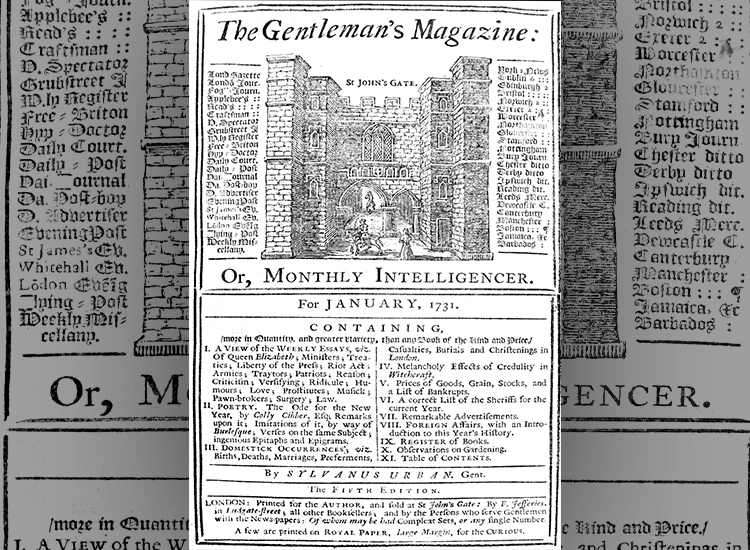
One intriguing early candidate is a surviving version of the opening page of the January 1731 issue of The Gentleman's Magazine. It pairs the publication's name and date with an engraving of St John's Gate and a list of contents. The imprint names R. Newton at St John's Gate, lists the price as sixpence, and notes that the issue was sold by booksellers. Those details place the page firmly within the magazine's commercial presentation. Was it already a magazine cover, or does the term require a separate printed wrapper designed to present the issue to buyers?
What Counts as a Magazine Cover?
The word cover can refer to the physical surface that encloses a publication or the printed face that introduces a particular issue. The distinction matters. Some early periodicals had no separate cover at all; the first page opened directly onto an article. Others used that page for the publication's title and contents. Book-like designs placed the title and publication details at the center.
For this essay, the key question is the role a surface played in presenting an issue to potential readers. A wrapper could protect the pages, and a title page could identify the publication. A magazine cover could perform these functions and make the issue itself more attractive to potential buyers. Because these roles can overlap, appearance alone cannot settle the question. Finding the first magazine cover requires evidence of how early publishers presented individual issues to their readers and what they expected those opening surfaces to accomplish.
Before the Modern Magazine Cover
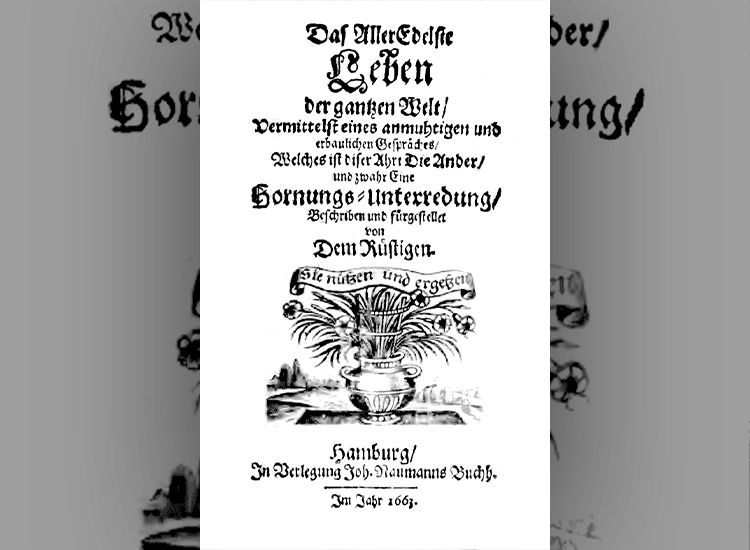
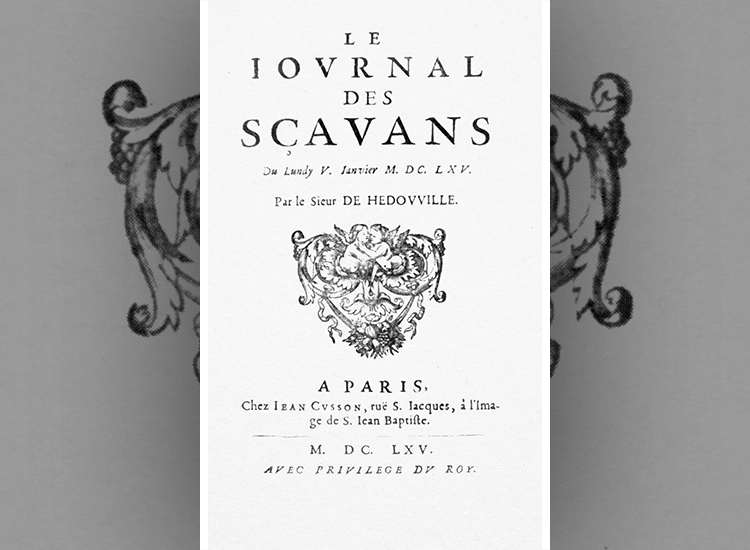
The magazine as a publishing form predates the English title most readers associate with it. Periodical histories point to Erbauliche Monaths-Unterredungen, a German monthly published between 1663 and 1668, as one of the earliest magazines. The French Journal des Sçavans and England's Philosophical Transactions also appeared in 1665. Each served a different audience and purpose. These publications make a single starting date difficult to defend. The magazine developed gradually, and historians do not always draw the line between a journal and a magazine in the same place.
Edward Cave's The Gentleman's Magazine, first issued in 1731, occupies a different place in this history. It is widely credited as the first periodical to use the word magazine in its title. Cave described the publication as an abridgment of the wit, humor, and intelligence circulating in London newspapers, with additional material for use or amusement. The title made magazine a familiar name for this mixed-content format. Periodical publishing itself was already decades old.
That distinction changes the cover question. The first English periodical to use the word magazine in its title may not have had the first magazine cover. Many early opening pages followed the conventions of books and pamphlets. They placed the title, date, publisher, and contents in a layout designed to identify the issue. An ornament or engraving could make the page more distinctive. Decoration alone, however, cannot establish whether a publisher treated it as a distinct sales tool. To answer that, we need to compare surviving covers with title pages and examine the clues each issue leaves about its intended use.
The Wrapper and the Marketplace
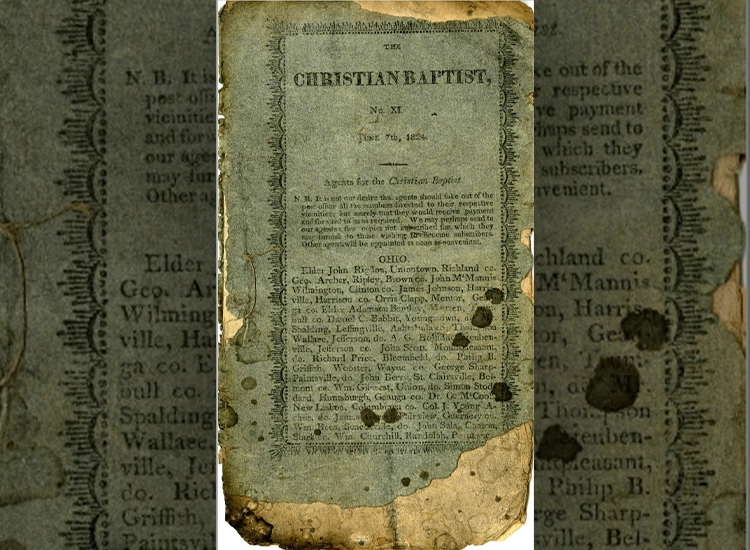
An outer wrapper offers a different kind of evidence. On June 7, 1824, The Christian Baptist, a religious periodical, used its cover to advertise books and other periodicals. It also named agents who could secure subscriptions and collect payments. The page connected a publisher's offerings to the people who might buy and circulate them. Although The Christian Baptist does not settle the question of the first magazine cover, its wrapper provides clear evidence that periodical covers served commercial purposes well before the modern magazine cover took shape.
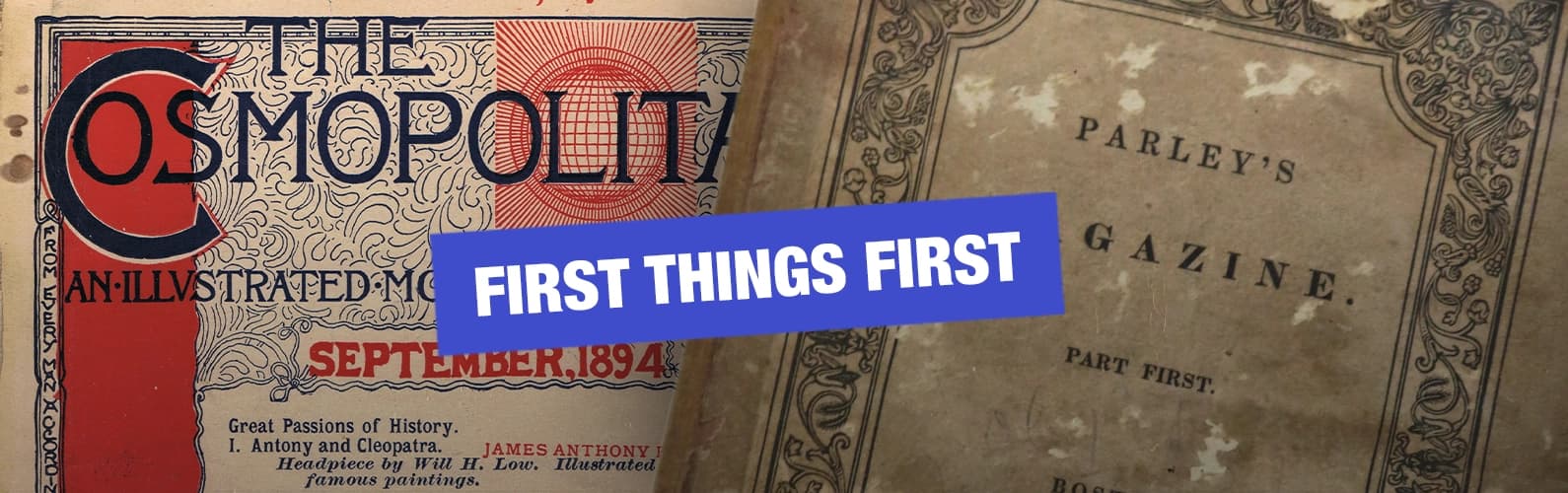
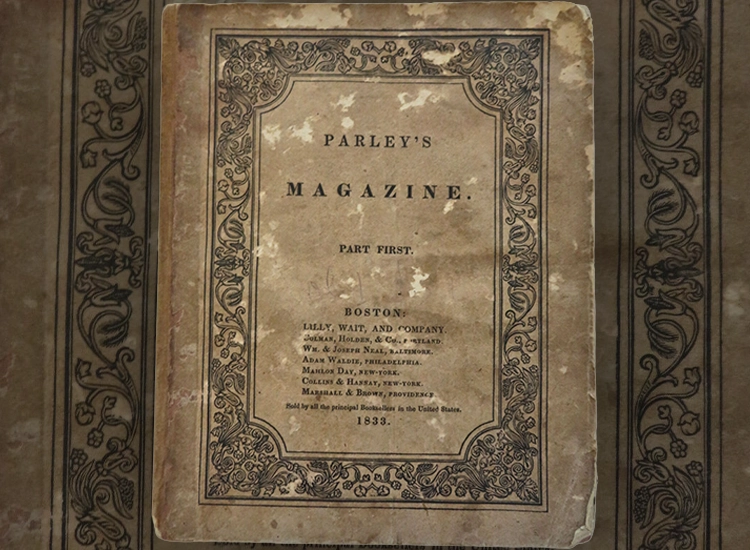
A surviving cover of Parley's Magazine, issue No. 14, dated 1833, offers a clearer example of how a magazine wrapper could identify and promote a particular issue. The title and issue number sit above a long list of publishers and booksellers in American cities. A line at the bottom announces that the magazine was sold by the principal booksellers across the country. The design is restrained, and the sales message is unmistakable. The cover identifies a particular issue and tells readers where to find it. Even without a prominent illustration or a preview of the contents, the page serves a clear commercial purpose.
The wrapper also complicates the evidence available to us. In the mid-nineteenth century, periodicals were sold as inexpensive weekly or monthly issues in paper wrappers. Subscribers could later have those issues bound into more durable volumes. A wrapper could carry prices, advertisements, publisher information, and distinctive images. Many individual wrappers were discarded during binding. As a result, surviving bound copies can omit evidence of how a magazine first met its readers. Finding the first cover therefore requires more than deciding what counted as one. It also means recovering a physical object that may no longer accompany the text it once enclosed.
Pictures That Sold the Issue
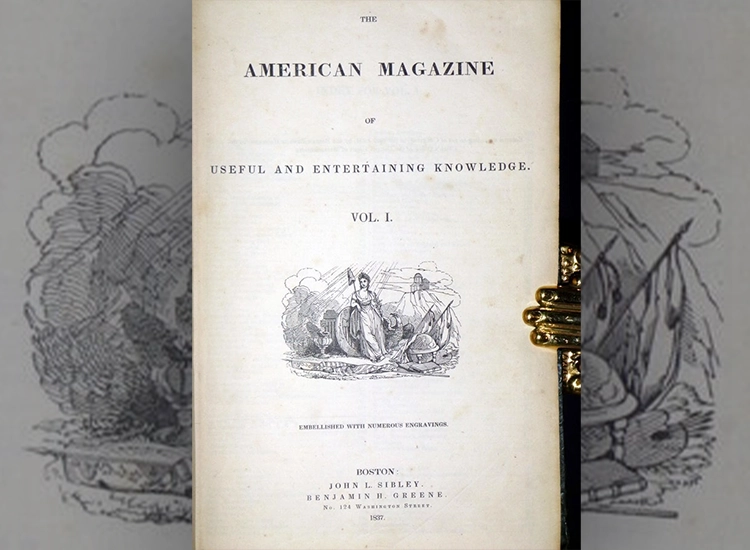
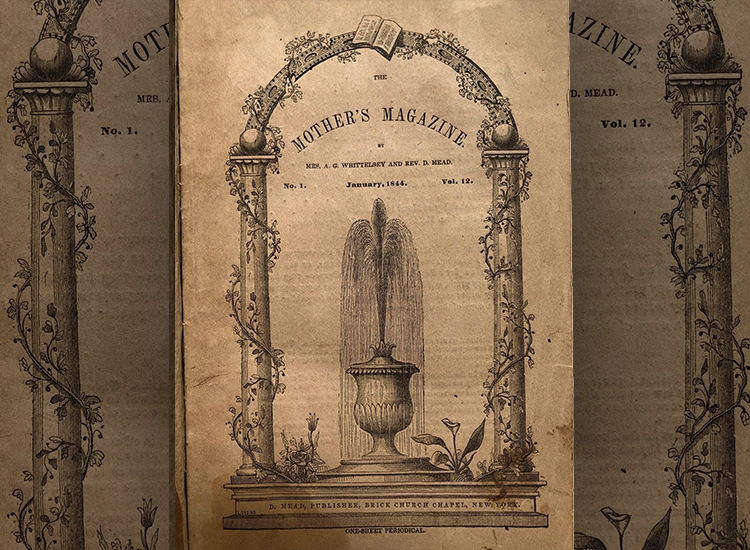
Images introduced another kind of appeal. The 1835 cover of The American Magazine of Useful and Entertaining Knowledge featured a small illustration. The layout, however, still resembled a book's title page. A more symbolic approach appeared on the 1844 cover of Mother's Magazine. Magazine researcher Gerald Grow interprets the allegorical image as an expression of the magazine's ideals of family life and maternal instruction.
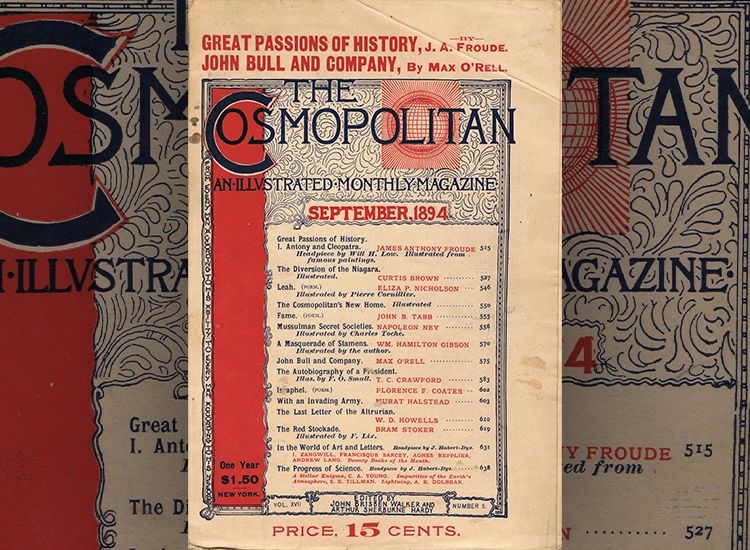
By the late nineteenth century, cover designers were testing the balance between symbolic imagery and specific sales messages. The 1872 cover of Peterson's Magazine retained elaborate ornament and added a line above the title urging readers to form subscription clubs: "Now is the time to make up clubs." Cosmopolitan in 1893 combined its masthead with brief cover lines and contents information. The Chaperone tried another approach in 1896. Labeled circles for departments such as art, science, and dress surrounded a generic illustration. Together, these examples show how covers could signal specific contents or communicate a magazine's broader identity.
Printing technology expanded those possibilities. Woodcuts and wood engravings had long allowed publishers to print illustrations. Fine detail and continuous tones remained difficult to reproduce economically. Advances in photographic processes and halftone printing made detailed tonal images practical for wider circulation. Improvements in color printing expanded those possibilities further. Publishers also had a commercial reason to invest in pictures. Frank Munsey, for example, pursued a mass-market audience with inexpensive, image-rich magazines.
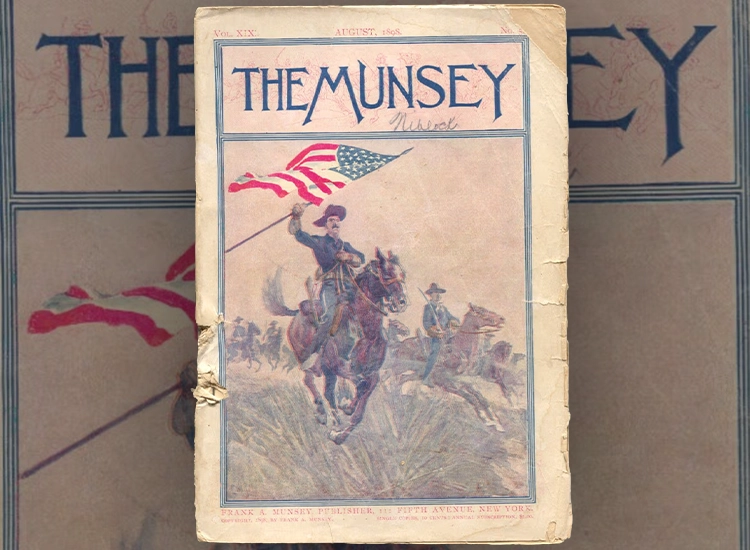
An August 1898 cover of Munsey's Magazine shows this approach in action. A large illustration of soldiers on horseback dominates the page. Only a couple of small lines of text appear near the bottom. Gerald Grow uses the term poster cover for this kind of design. A single illustration commands attention, and the surrounding text plays a secondary role. The picture could sell a mood or a dramatic spectacle without advertising a particular article.
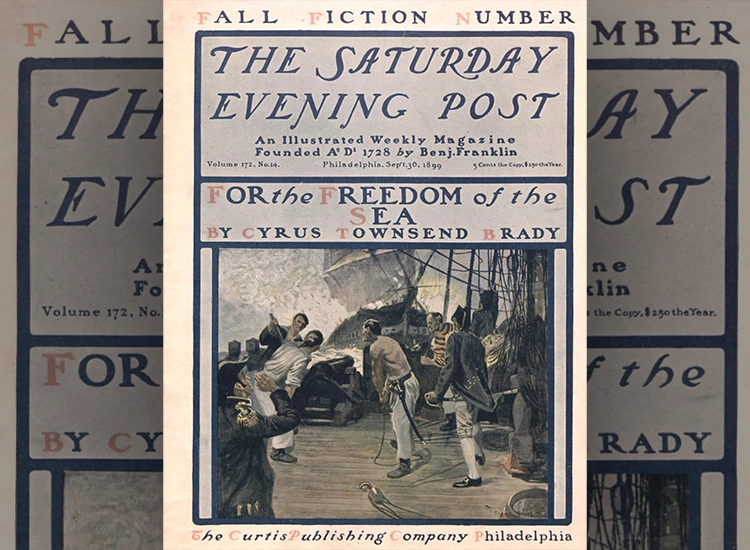
The Saturday Evening Post offers another important case. After George Horace Lorimer took over as editor in 1899, the magazine began placing greater weight on cover imagery. The magazine's archive dates its first full-page black-and-white cover illustration to September 2, 1899. On September 30, the magazine introduced its first separate color cover. The Post's own retrospective identifies it as a seascape titled For the Freedom of the Sea by George Gibbs. The strategy connected visual appeal with mass marketing. Strong cover images could attract readers. A larger audience made the magazine more attractive to advertisers. Advertising revenue subsidized the five-cent cover price and financed commissioned illustrations.
The dates point to a gradual change. Illustrated covers existed decades before 1899, and publishers experimented with several approaches at the same time. By the end of the nineteenth century, some magazines treated the image as the cover's main attraction and a selling point in itself. This distinction matters to our search. The earliest picture on a magazine cover and the first cover designed primarily to attract buyers may be two different milestones.
So, What Was the First Magazine Cover?
The strongest candidate our search has uncovered is the original printed wrapper of the December 1736 issue of The Gentleman's Magazine. The January 1731 opening page we examined earlier introduced the publication with a title, an engraving, and a table of contents. The surviving 1736 copy preserves something more tangible: a separate paper wrapper printed with the magazine's title, the month of publication, an engraving of St John's Gate, and notices for books offered to readers. Bibliographer Simon Beattie describes it as one of the earliest English books issued in printed wrappers. He notes that earlier scholarship placed the first printed wrappers on English magazines around 1740. The surviving 1736 wrapper predates that estimate.
The answer changes if we count a printed opening page as a cover. Erbauliche Monaths-Unterredungen, a German periodical first published in 1663, appears in some online collections with an image labeled as its cover. The surviving digital copy shows a decorated title page. On its own, that image cannot establish whether an outer wrapper originally accompanied the issue. This distinction matters because printed opening pages and physical covers belong to different parts of the story. Many paper wrappers were discarded when periodicals were bound into annual volumes. This has left gaps in the surviving record. Within the English publishing record, the December 1736 wrapper of The Gentleman's Magazine is the earliest surviving printed magazine wrapper our research has been able to verify. An earlier example may still emerge. The available evidence makes this our strongest answer.
Short Answers (FAQ)
What was the first magazine cover in history?
The earliest surviving printed magazine wrapper we could verify in the English publishing record belongs to the December 1736 issue of The Gentleman's Magazine. It is a strong early candidate, but the available evidence does not establish it as the first magazine cover worldwide.
What is the difference between a magazine cover and a title page?
A title page identifies a publication or issue, usually through its title and publication details. A magazine cover can serve that purpose while also presenting the issue to potential buyers. Early periodicals sometimes combined these roles, which makes the distinction important when identifying the first magazine cover.
When did magazine covers become a tool for selling magazines?
Magazine covers served commercial purposes by at least the early nineteenth century. The Christian Baptist used its cover to advertise books and subscription agents in 1824, while Parley's Magazine listed publishers and booksellers on its cover in 1833. Image-led covers gained greater prominence later in the nineteenth century.