Home
Home Articles
 Twos Talks
 Videos
Art Nouveau in a Minute: Nature Reimagined for the Modern Age
As industrialization changed how objects were made, Art Nouveau changed how modern design looked through the language of organic forms.
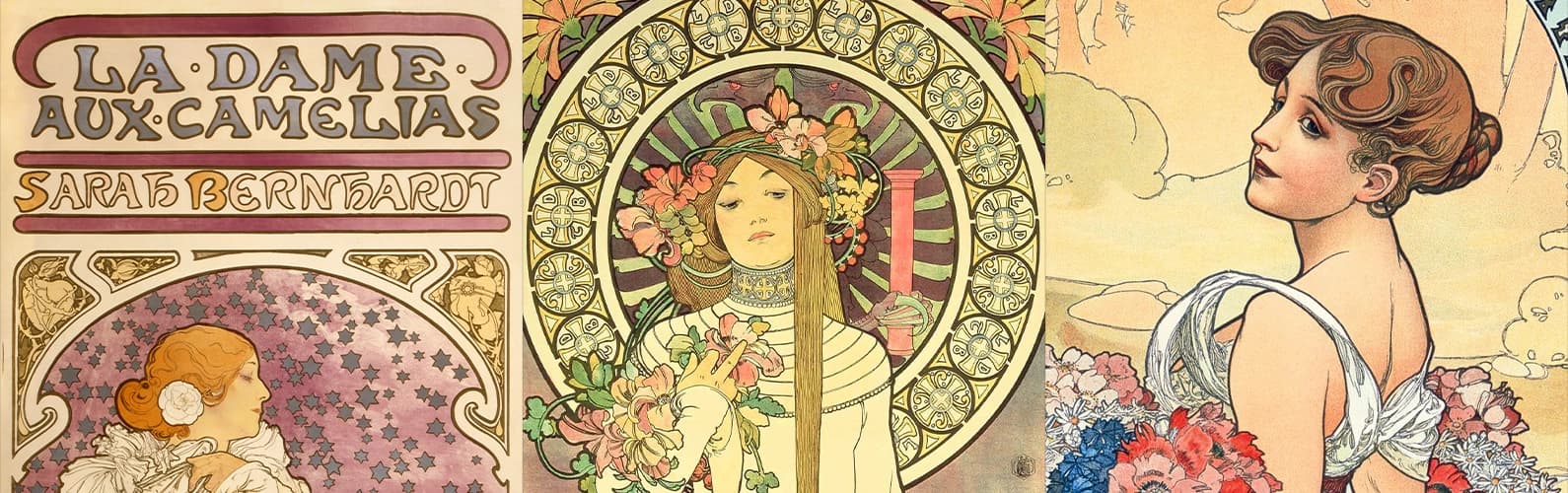
Art Nouveau took shape in Europe around 1890 during a period of rapid industrial growth and urban expansion. As mass production changed cities and everyday objects, many artists and designers looked for an alternative visual approach. The movement responded to the mechanical aesthetics of industrialization through organic forms and decorative principles that spread across architecture, graphic design, furniture, jewelry, and typography. Although its popularity declined before World War I, Art Nouveau shaped later approaches to organic form and integrated design.
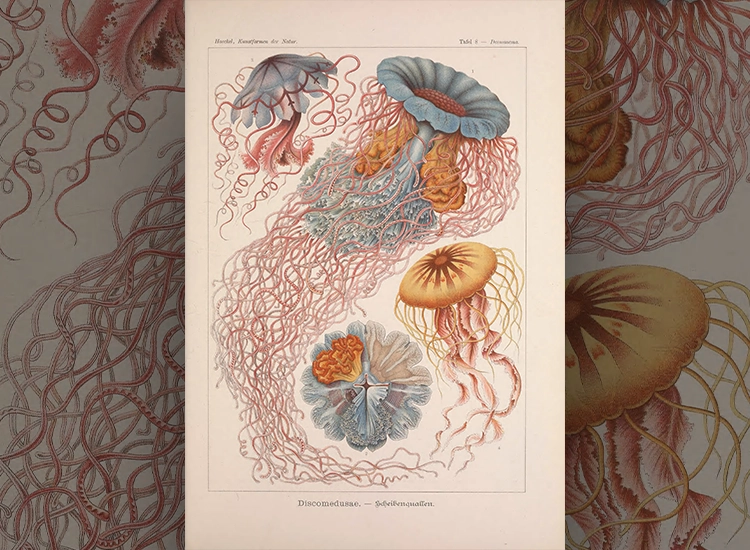
Haeckel's studies of natural forms illustrate the organic structures that inspired many Art Nouveau designs.
Key Principles of Art Nouveau
Organic Forms
Nature served as the movement's primary source of inspiration. Stylized interpretations of plants, flowers, insects, and the human figure appeared throughout the movement.
The Whiplash Line
Long, flowing, plant-like curves connected architecture, ornament, and illustration into continuous compositions.
Unity of Art and Design
The movement rejected rigid distinctions between fine art and applied arts. Buildings, interiors, furniture, typography, and decorative objects were developed together as interconnected parts of the same environment.
Craftsmanship with Modern Materials
New materials such as iron and glass broadened design possibilities without diminishing the role of craftsmanship and ornament.
Total Design
Art Nouveau extended design beyond individual objects to complete environments. Architecture, interiors, furniture, lighting, and ornament were planned as parts of a unified whole.
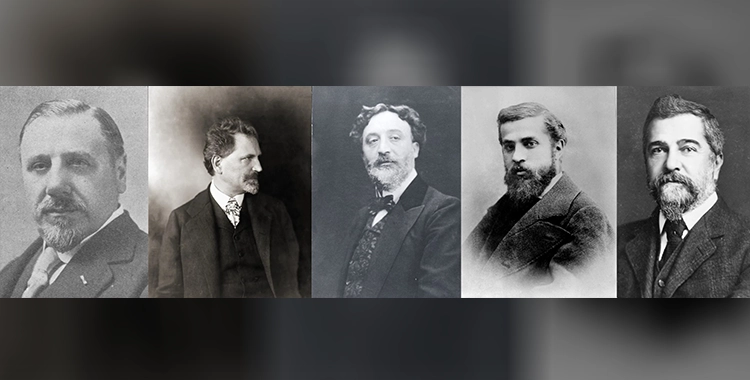
Notable Designers
Victor Horta
Horta pioneered Art Nouveau architecture in Belgium, using iron, glass, and flowing structural forms that dissolved the boundary between engineering and decoration.
Alphonse Mucha
Mucha brought Art Nouveau into popular culture through posters that merged illustration with ornamental lettering and decorative detail.
Hector Guimard
Best known for the Paris Métro entrances, Guimard brought Art Nouveau into public architecture and urban infrastructure.
Antoni Gaudí
Although highly individual in style, Gaudí created an architectural approach that drew on Art Nouveau, combining natural forms with craftsmanship throughout his designs.
Louis Comfort Tiffany
Tiffany's stained glass brought Art Nouveau into homes and made decorative art part of everyday life.
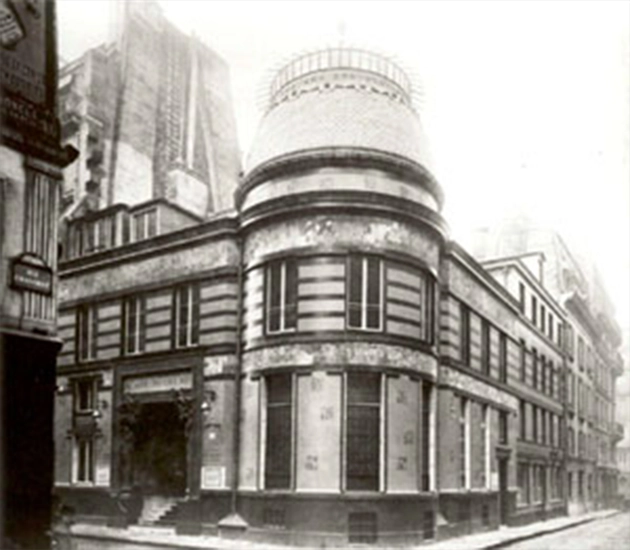
Siegfried Bing's gallery gave Art Nouveau its name and became an early center for the movement.
Historical Context and Influences
Art Nouveau took shape during the final decades of the nineteenth century, when industrialization was changing European society. The movement grew out of the British Arts & Crafts movement. Japanese woodblock prints and close observation of nature also influenced its development. Historical styles gave way to a new decorative approach that treated nature as the foundation of modern design. Across Europe, the movement appeared under different names. Jugendstil became the preferred term in Germany, Modernisme in Catalonia, and Sezessionstil in Austria. Despite those regional identities, the movement shared a common set of ideas.
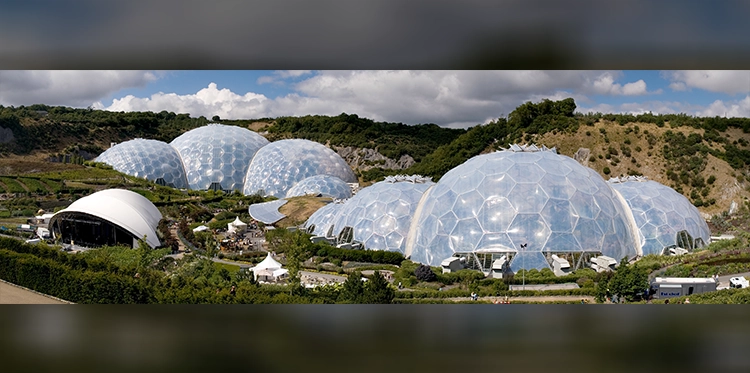
Its organic structures echo Art Nouveau’s interest in natural forms and the relationship between design and nature.
Photo: Jürgen Matern / Wikimedia Commons
Impact Today
Art Nouveau no longer exists as a unified movement. Digital technology has made its flowing forms and decorative complexity easier to create than ever before. The result is visible in biophilic architecture and many contemporary brand identities.
Short Answers (FAQ)
What is Art Nouveau in simple terms?
Art Nouveau was an international design movement active between about 1890 and 1914 that used flowing lines, natural forms, and handcrafted decoration across architecture, graphic design, furniture, and the decorative arts.
Why is Art Nouveau important in design history?
Art Nouveau introduced one of the first unified approaches to modern design, combining architecture, graphics, interiors, and decorative arts within a shared visual language inspired by nature.
How did Art Nouveau influence modern design?
It established principles of organic form, integrated design, and expressive visual systems that continue to influence architecture, branding, illustration, typography, and environmental design today.