Home
Home Articles
 Twos Talks
 Videos
Q&A with Jessica Walsh: Women in Graphic Design Leading Their Own Way
Twos Studio’s exclusive interview with Jessica Walsh on starting &Walsh, building a team, leading with vision and creativity, and using design for cultural and social impact
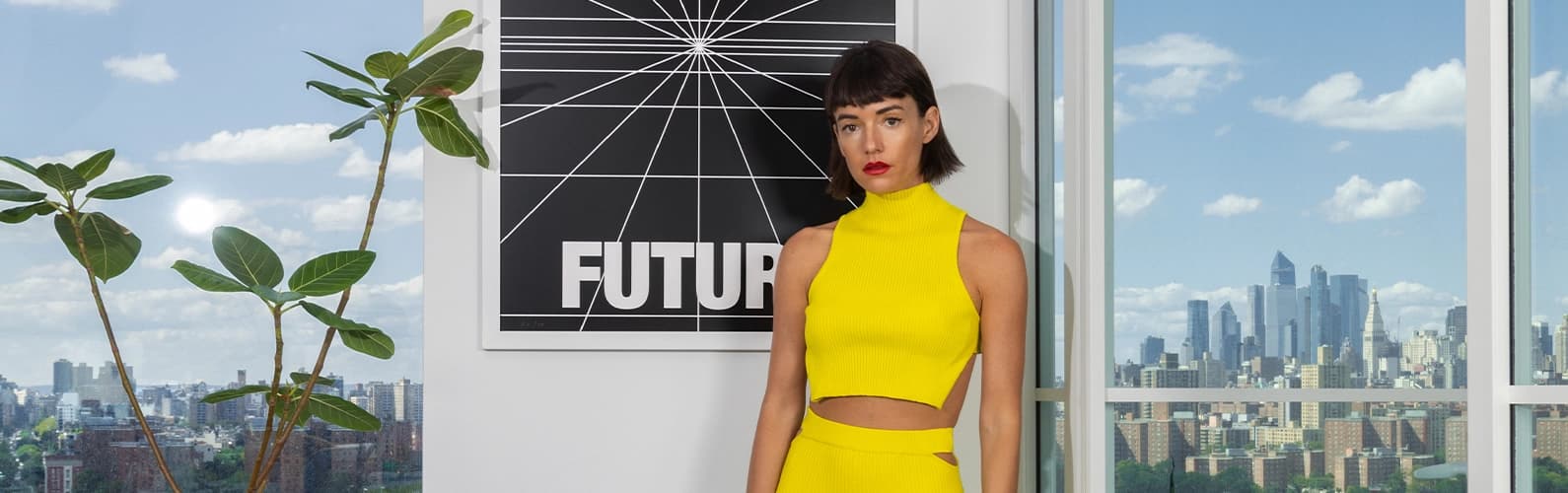
Jessica Walsh is an American graphic designer, art director, illustrator, and educator celebrated for a bold visual style that balances playfulness with precision. She has earned numerous awards, including distinctions from the Type Directors Club, Art Directors Club, Print magazine, and Graphis publishing, as well as honors such as the Computer Arts “Top Rising Star in Design,” the Art Directors Club Young Guns award, and Print magazine’s New Visual Artist recognition.
Her early recognition established her as one of the most visible voices of her generation. She began her career as an intern at Pentagram before joining Sagmeister Inc., the studio of influential designer Stefan Sagmeister, in New York. In 2010 she became his partner and co-founded Sagmeister & Walsh, a collaboration that brought her work to global audiences.
In 2019 she launched her own studio, &Walsh, becoming one of the few women leading a major creative agency under her own name. Most recently, she served as Design Jury President at Cannes Lions 2025, reaffirming her position as a prominent voice in contemporary design and art direction.
In this interview, she reflects on building a studio, leading teams, curating impactful portfolios, and using design to influence culture and social issues—all in her own words.
Can you share a bit about your journey and what led you to choose graphic design as your career path?
When I was 11, I taught myself how to code and design websites. I created a HTML help site that taught other kids how to make websites. Google Advertising had just launched and I tried one of their banners on my website and started making a lot of money off of it. I never thought I could make money from this hobby; I always thought I would do a regular job in business or finance. My success early on with web design was what gave me confidence to go to art school and dedicate my life to design.
What inspired you to open &Walsh, and how did your experiences shape your decision to start your own studio?
I started working with Stefan (Sagmeister) after my time at Print Magazine. At the time, it was at his studio, Sagmeister Inc. Immediately after starting, I began to handle all aspects of the project from ideation, client management, design, all the way through production. After a few years I was ready to go on to start my own studio, but he didn’t want me to leave. That’s when I negotiated the partnership, and our studio became Sagmeister & Walsh. That was a pivotal moment for me because I learned that hard work and persistence opened doors for new opportunities.
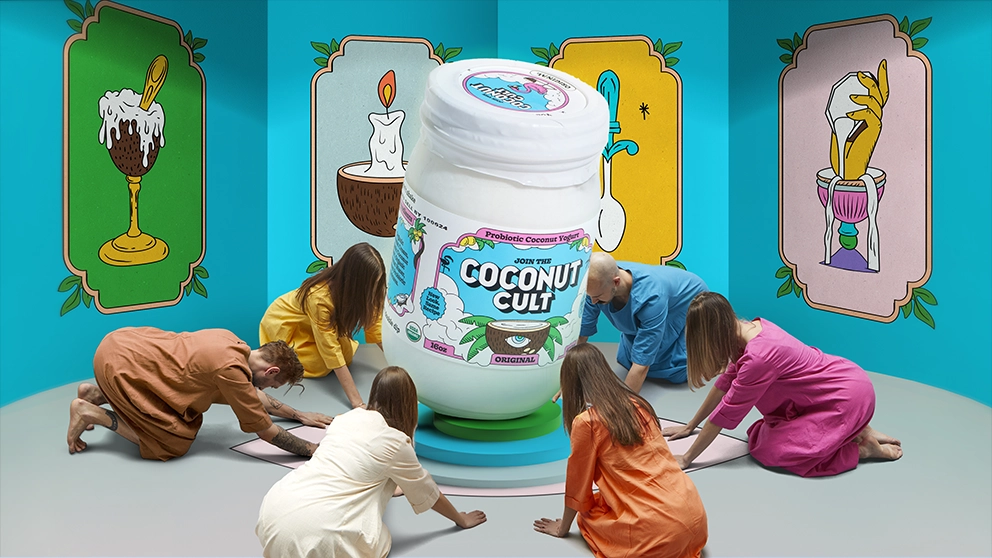
A few years later, I decided it was then the right time to have my own studio. This was a dream I’d had since I was young. So, in 2019 I launched my own creative agency &Walsh through the same secret ingredient of my creative practice: hard fucking work.

At what point in a designer’s career do you think they should consider opening their own studio, and what are the key factors to keep in mind when taking that leap?
It is hard to say when that perfect moment is. There are a lot of benefits to learn in other environments, but there is also a lot of beauty in creating your own. For me I just couldn’t stop thinking about it and that’s when I knew I was ready.
For anyone opening a studio here are some lessons we have learned over the years:
Don’t grow too fast
At one point, we grew too fast. We had a lot of demand & took on too many designers at once without the right operational setup. Having the demand is great, but as you grow team dynamics and feelings of ownership change & you need to pay attention to this. We are now very strategic with the work we take on & do not let demand dictate our growth plan. We turn down most jobs that come our way.
Don’t try to do it all
In a blog post from when I started &Walsh I talk about this. Over the years, I have learned that while I like to do it all, at a certain scale of our business: I can’t do it all. This was especially evident a few years ago - our team grew very quickly, with the usual growing pains, & at the same time, I went through something terrible in my family/personal life. I was spread incredibly thin. As a result, this past year, I’ve dedicated all my focus towards making a few new key hires & a new operations plan. Taking the weight of every detail of the business off my shoulders has made a big difference on our work & the office culture. It’s something I learned the hard way, but an incredible relief as we move into this next endeavor.
Hiring the right people is one of the most important skills you can have
Early on I always looked for the top creative talent that I could find when hiring. It was all about the portfolio: how strong someone was in terms of formal design skills or conceptual abilities. Along the way, I realized that while talent is important, it isn’t everything. Many designers can make beautiful work or great ideas, but lack other important skills that make their work a success. When considering designers or who we promote within the company for senior level positions, 50% is their work, & 50% is other criteria such as strategic thinking, professionalism, ability to manage workloads and make deadlines, follow through, ability to understand and act on client feedback, how much of a team player they are, communication skills, etc.
What advice would you give to aspiring designers aiming to work at top agencies, and how can they curate a portfolio that not only stands out but also showcases the skills that agencies truly value?
I prefer quality over quantity with portfolios. I’d much rather see a few strong pieces than a few strong pieces amongst numerous mediocre pieces. Generally, I’d start and end with your best projects to capture someone’s interest and end on a good note.
In terms of what you show in your portfolio, consider what work you love doing most. The work you show in your portfolio is often the work you get hired for. You may want to skew your portfolio towards work you love doing and want to be making in the future.
As a female designer, creative director, and studio owner, what challenges have you faced in the industry, and what advice do you have for other women pursuing leadership roles in creative fields?
There are many reasons why women, myself included, have found it more difficult to develop our careers, some of which include:
Sexism in the workplace
Studies show that companies are often consciously or unconsciously biased in favor of male candidates, which leads to more men being hired, getting raises, and receiving promotions. The imbalance in gender representation then creates a heightened sense of competition between those of us trying to make it to the top, which means defaulting to internalized sexism.
A lack of diversity in mentors or idols historically
Open a design history book, and you’ll see that almost all the famous designers mentioned are white men. The design industry used to be a boys club at the top, lacking diversity across both gender and race. With a lack of representation among their role models, underrepresented people can be deterred from pursuing creative positions.
The responsibility of childbearing
Many start families and have children around the time they’d be considered for career advancement. Historically, most cisgender men continued working and did not hold child‐bearing responsibilities, leading to a gender imbalance in terms of career success. Many call this the “motherhood tax,” referring to the financial burdens and sacrifices involved in motherhood.
All of these issues are multiplied tenfold for women of color, women with disabilities, and other intersectional identities. My advice is to find your community and surround yourself with the people who lift you up. This industry can be tough and having people you trust to turn to and who can help you navigate this world is priceless.
You’re known for being active on social issues through your design work. How important is it for designers and creatives to be actively involved in social issues, and how does that influence their work and impact?
I launched &Walsh in 2019 with two goals in mind: to produce stellar creative and strategy work for top clients, and to leverage the studio’s resources for social impact initiatives that make a tangible difference in this industry. Our initiatives include our non-profit Ladies, Wine, & Design, my long-running Sorry I Have No Filter series, and Let’s Talk About Mental Health. We enjoy having projects to work on outside of client projects, it lights up a different part of our brains and allows us to experiment in new ways.
To see more of &Walsh studio's work visit: www.andwalsh.com