Home
Home Articles
 Twos Talks
 Videos
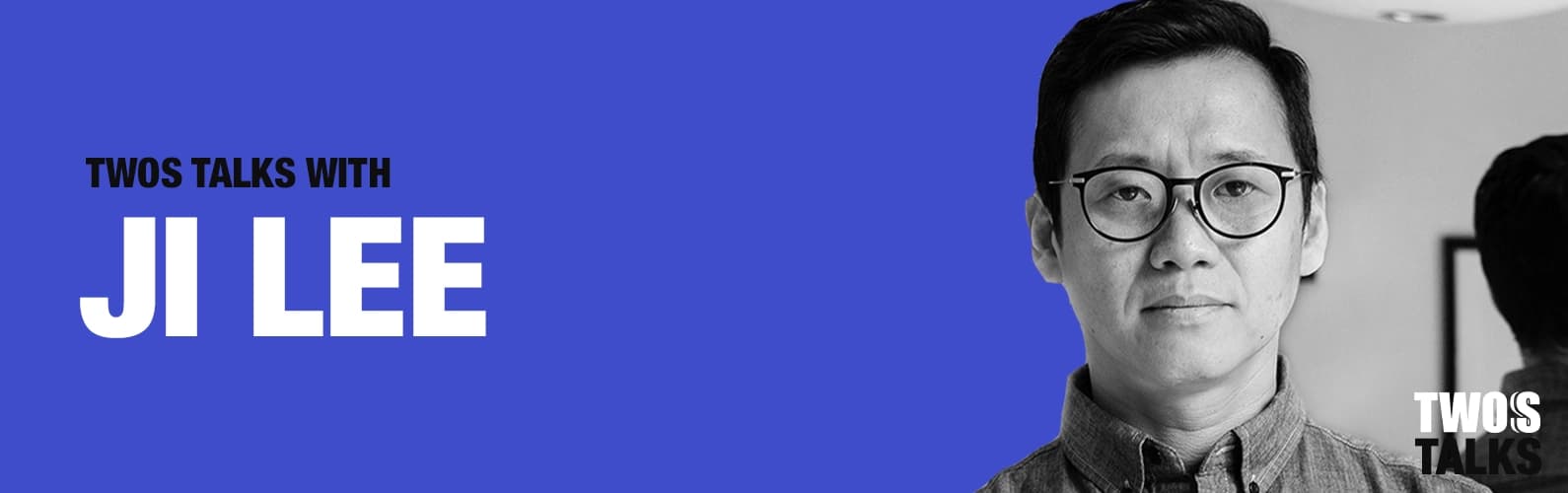
Ji Lee on How Designers Can Find Time for Personal Projects
From rejected ideas to creative director roles at Google and Facebook, Ji Lee explains why personal projects shaped his career.
Editor’s Note:
This article is adapted from our podcast interview with Ji Lee, originally recorded for Twos Talks and released on the Twos Studio YouTube channel. It has been edited for clarity and format.
In this episode of Twos Talks, we speak with Ji Lee, a graphic designer and creative director known for projects such as the Bubble Project and for his work at companies including Google, Facebook, Instagram, and Samsung. Over the course of his career, Ji Lee has continued developing personal creative projects alongside leadership roles inside some of the world’s largest technology companies. In our conversation, Ji Lee explains why personal projects became a defining part of his design career and how designers can find time to develop their own ideas even while working full time.
When Personal Projects Are Fun, You Will Always Find Time
Many designers working in agencies or large companies struggle with the same question: if personal projects are so important, how do you actually find time for them?
According to Ji Lee, the answer is simpler than most people expect.
“When you are having fun, you can always find time. You can always find time to watch a football match, right? If you're a Premier League fan, or if you're a video game fan, or if you like going out with friends for a drink, or watching movies, or riding a bicycle. You do these things because they’re fun.
I never thought, ‘Oh my God, I have to reserve two hours of my evening to do my personal project.’ It was never like that for me. I couldn’t wait to get to these projects.
Just like I cannot wait to watch Brazil play Germany in the World Cup, or make this Lego set I just ordered, or go out for a bike ride in the park. Because it’s fun, you always find time to do it.”
For Ji Lee, personal projects were never something separate from his professional work as a designer. They were the activities that kept his curiosity and creativity alive.
How the Bubble Project Changed Ji Lee’s Career
Today, Ji Lee is widely known as a creative leader who has worked at companies such as Google, Facebook, Instagram, and Samsung. But when asked what actually opened the doors to those opportunities, he points to his personal projects.
“I can give one hundred percent of the credit to my personal projects for being the reason why I was able to have this career.
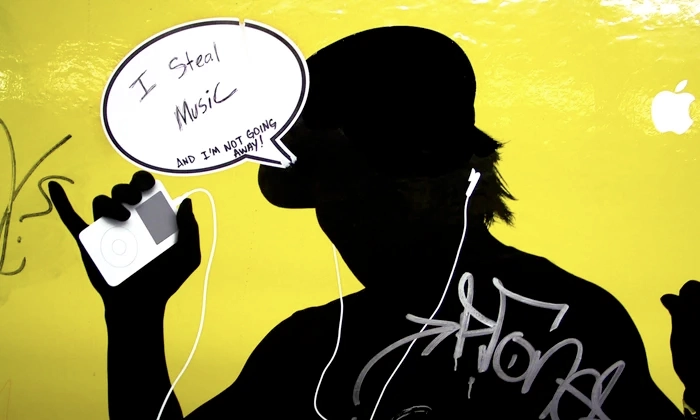
The Bubble Project started everything. Even before that, the work I did in art school were free creative experiments and those were the things in my portfolio. Then the Bubble Project happened with the stickers, and that’s when I started receiving offers from agencies.”
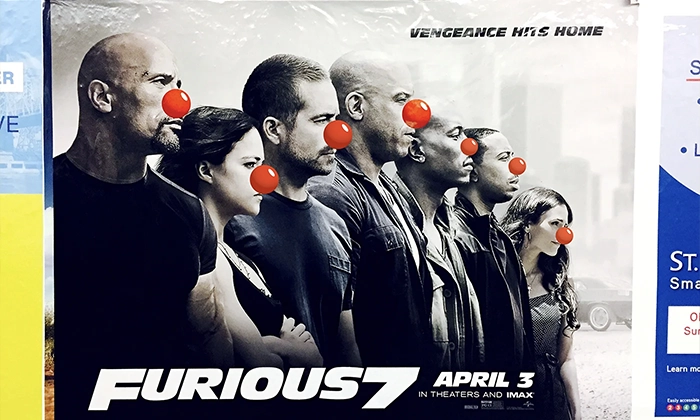
The Bubble Project invited people to place speech bubbles onto advertisements in public spaces and write their own thoughts inside them. The project transformed traditional advertising into a public conversation, allowing everyday people to interact with the messages around them.
That idea quickly attracted attention inside the design and advertising world.
“David Droga interviewed me because he was curious about the Bubble Project. I had zero produced advertising pieces in my portfolio at the time. In a typical scenario it would be impossible to get into a great agency without any advertising work.
But he saw my portfolio, which was full of art school projects and the Bubble Project, and right then he offered me a job.”
The project demonstrated something that many agencies look for in designers: the ability to generate original ideas and turn them into real-world experiences.
Why Personal Projects Matter More Than Portfolio Pieces
For Ji Lee, personal projects reveal something that traditional portfolio work often cannot.
“In the end, the people looking at your portfolio are also people with hearts and ideas.
When they see professional projects, they understand those were done to help a company sell a product or service. Although they can be very creative, they rarely have the same sincerity or personality or spirit as personal projects.
Personal projects are unique to you. You are the one who did it.”
This sincerity is what makes personal work memorable.
When agencies, studios, or companies evaluate a designer’s portfolio, they are not only looking at visual execution. They are also trying to understand how the designer thinks, how they approach ideas, and how they express their perspective.
Personal projects often reveal those qualities much more clearly than commercial work.
“And when people see that, they feel something. It’s hard to feel something deeply emotional when you're looking at a campaign for a big brand.
Creativity Is Ultimately About Solving Communication Problems
Although many of Ji Lee’s projects appear playful or experimental, he describes his work in a much more practical way.
For him, design is fundamentally about solving communication problems.
“Many of the things that I do are creative problem solving. If it’s about creating dialogue between advertisers and everyday people on the street, or rethinking the letters of the alphabet, or helping my eighty-year-old parents connect to their grandchildren through social media, it’s all about problem solving.”
This way of thinking also explains why companies such as Google, Facebook, and Samsung were interested in bringing him into their creative teams.
If a designer can solve communication challenges through personal experiments, that same thinking can often be applied to brand communication and product design.
“If someone can solve this kind of communication problem, agencies and companies believe that person can also solve their brand’s challenges to communicate better with people in a way that’s authentic and effective.”
In today’s digital environment, authenticity has become one of the most important qualities for brands trying to connect with audiences.
“Brands have to be authentic. Otherwise you're just scrolling down. You're skipping the button.”
For Ji Lee, personal projects remain one of the most powerful ways designers can develop that authenticity.
They begin with curiosity, experimentation, and the freedom to explore ideas simply because they feel exciting to pursue.
And sometimes, as his own career demonstrates, those personal experiments can open doors that lead far beyond what a designer originally expects.